Integration Partners
Integration partners are frontends, aggregators and earn platforms that help users discover and access Covered Vaults through familiar experiences — without forcing an external “buy coverage” workflow.
They are the distribution layer for Catalysis:
- They surface covered opportunities where users already allocate capital.
- They route deposits into Covered Vaults via standard UX flows and secure vault integrations.
Visualization
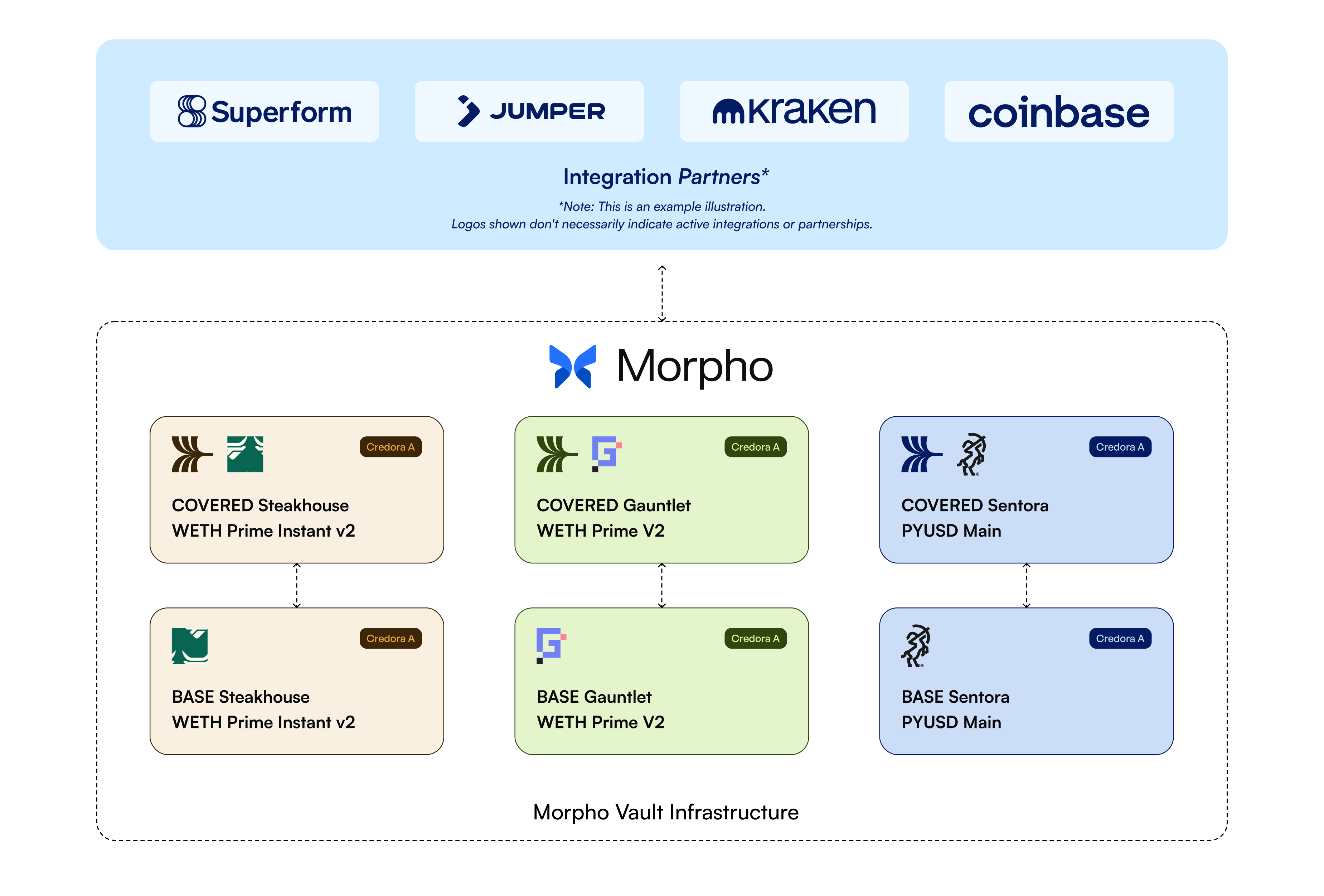
What Catalysis enables
- Native integration: Coverage integrates directly with vaults on existing Tier-1 DeFi protocols (Morpho, Euler, Upshift etc).
- Competitive Pricing: Depositors access downside protection with minimal impact on net vault APY. Typically 25–75 bps, depending on DeFi vault rating.¹
- Fully onchain and transparent: Coverage terms and payouts are enforced by smart contracts and executed without manual intervention or committee discretion.
- Opt-in coverage: Platforms can offer coverage as an opt-in upgrade. Existing vaults and yields remain unchanged, only users who want protection opt in.
FAQs
Q1. What does the integration process look like for a distribution partner?
Integration is straightforward:
- UI surfacing: list Covered Vaults alongside Base Vaults, and show premium cost + coverage summary.
- Routing: update your deposit/withdraw flows to route to the Covered Vault contracts (instead of the Base Vault) when users opt in.
- Smart contract hookup (optional): if you use routers/bundlers, add the Covered Vault calls to your existing route so the end state is a standard onchain vault position.
Q2. Is it time-consuming?
Typically NO.
- Most partners ship in < 2 weeks (UI + routing + basic checks).
- With deeper testing, edge cases and staging cycles, it can take ~3 weeks.
Q3. What’s in it for distribution partners?
- Differentiated product: “covered yield” is a clear upgrade vs standard vault listings.
- Seamless UX: users opt into protection inside the same vault flow — no external policy step.
- Competitive rates: users get access to risk coverage at low premium impact on net APY (risk-calibrated).
- Better stickiness: protection reduces perceived downside, which can improve retention and larger allocations.
Q4. What’s the most important thing to communicate in the UI?
Make the covered vs base choice obvious and comparable:
- Premium cost (bps or estimated net yield impact)
- Coverage scope (what is covered / not covered, in plain language)
- Key limits & conditions (e.g., max coverage capacity, trigger conditions, any relevant constraints)
A good default is: “Base = higher yield, no protection. Covered = slightly lower yield, defined protection.”
Q5. What are integration partners not responsible for?
- Pricing or underwriting (handled by Catalysis + CoverPools)
- Claims decisions or execution (defined by coverage terms and executed by the system)